
A Septic System is the Hive Beneath Your Home 🏠 —Quiet, Efficient, & Essential.
For Homes 🏠 not connected to a municipal sewer, a septic system acts as a self-contained, underground wastewater treatment plant, working naturally and continuously to protect both the home and the environment.
🐝 How the Septic “Hive” Works
🚿 Step 1: Collection
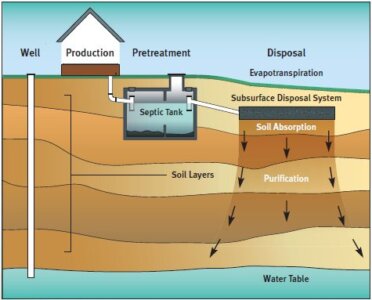
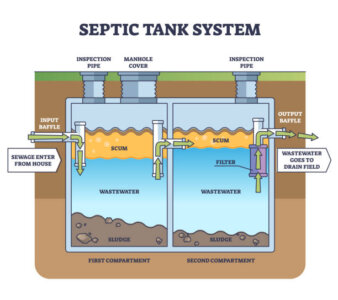
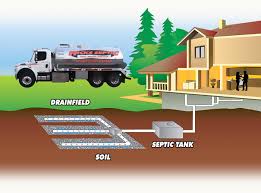
All household wastewater—from sinks, showers, toilets, and laundry—flows into a buried, watertight septic tank. This is the system’s control center.
⚖️ Step 2: Separation
Inside the tank, gravity does the work:
-
Sludge (heavy solids) settles at the bottom
-
Scum (fats, oils, and light materials) floats to the top
-
The clarified liquid in the middle is called effluent
The tank’s job is to hold solids in place, preventing them from moving further into the system.
🌱 Step 3: Natural Treatment
The liquid effluent flows out of the tank into the drainfield (also called a leach field).
Here’s where nature takes over:
-
Effluent slowly disperses into the soil
-
Soil and naturally occurring bacteria filter, break down, and purify the wastewater
-
Cleaned water safely returns to the groundwater system
This process protects drinking water sources and the surrounding ecosystem.
🐝 Why Septic Systems Matter
-
No connection to public sewer required
-
Uses natural biological processes—no chemicals or machinery
-
Designed to operate silently underground for decades
-
Common in rural and suburban areas
When properly designed and maintained, a septic system is one of the most efficient and environmentally friendly wastewater solutions available.
🐝 The Bee’s Takeaway
A Septic System Doesn’t Just Dispose of Waste—It Treats It.
Like a Well-Run Hive: